November 29, 2026
City mobility scooters: what suits shops, pavements and neighbourhoods
By @lightenthejourney
A lightweight city mobility scooter is built around a simple idea: make short everyday journeys easier without turning the scooter itself into the main obstacle. Shops, pavements and neighbourhood routes each place different demands on a scooter. A model that feels easy in a wide supermarket aisle may feel awkward on a busy high street, while a scooter with strong outdoor capability may be cumbersome in a small flat. The useful question is not which machine looks impressive on paper, but which design matches the places it will be used.
What "lightweight city" means in practice
In this setting, lightweight does not mean flimsy. It means the scooter is designed to be manageable as part of daily life: lifted into a car where possible, folded or dismantled for storage, moved through doorways, and used on routes with kerbs, paving stones, ramps and shared spaces. The focus is portability paired with enough stability for ordinary streets and public places.
The term also points to a balance. A very small scooter may be easy to carry but tiring to ride over uneven paving. A larger one may feel steadier outdoors but take up too much space at home or in a shop. Sites such as dashmoto.co describe this category as foldable electric mobility scooters for portable everyday transportation and independent movement, which captures the practical aim: go further with less planning around storage and transport.
How the main design features work together
A scooter feels suitable when its size, steering, wheels, seat and controls suit the rider and the route. These features are linked. Changing one often affects another.
Size and turning room
Shops are full of small obstacles: display stands, checkout queues, doorway corners and people who stop without warning. A tighter turning radius helps here because the scooter can change direction without a wide sweep. It also matters in lifts, hallways and cafes. On a pavement, the same agility helps when avoiding street furniture or stepping around a pram, though the rider still needs enough space to stop safely.
Length and width matter just as much as turning ability. A narrow scooter may slip through a gap, but if the rider has poor side support or the wheels catch on edges, the apparent advantage disappears. The best size is one that leaves room for the rider to sit securely and for the scooter to move predictably, not simply the smallest set of dimensions available.
Wheels, clearance and the surface underfoot
Pavements are rarely smooth. They have slab joints, dropped kerbs, tactile paving, small lips at crossings and occasional loose edges. Wheel size affects how a scooter rolls over these changes. Larger wheels generally deal better with small bumps, while smaller wheels can be easier to package into a compact frame. Solid wheels reduce worry about punctures but can transmit more vibration through the scooter.
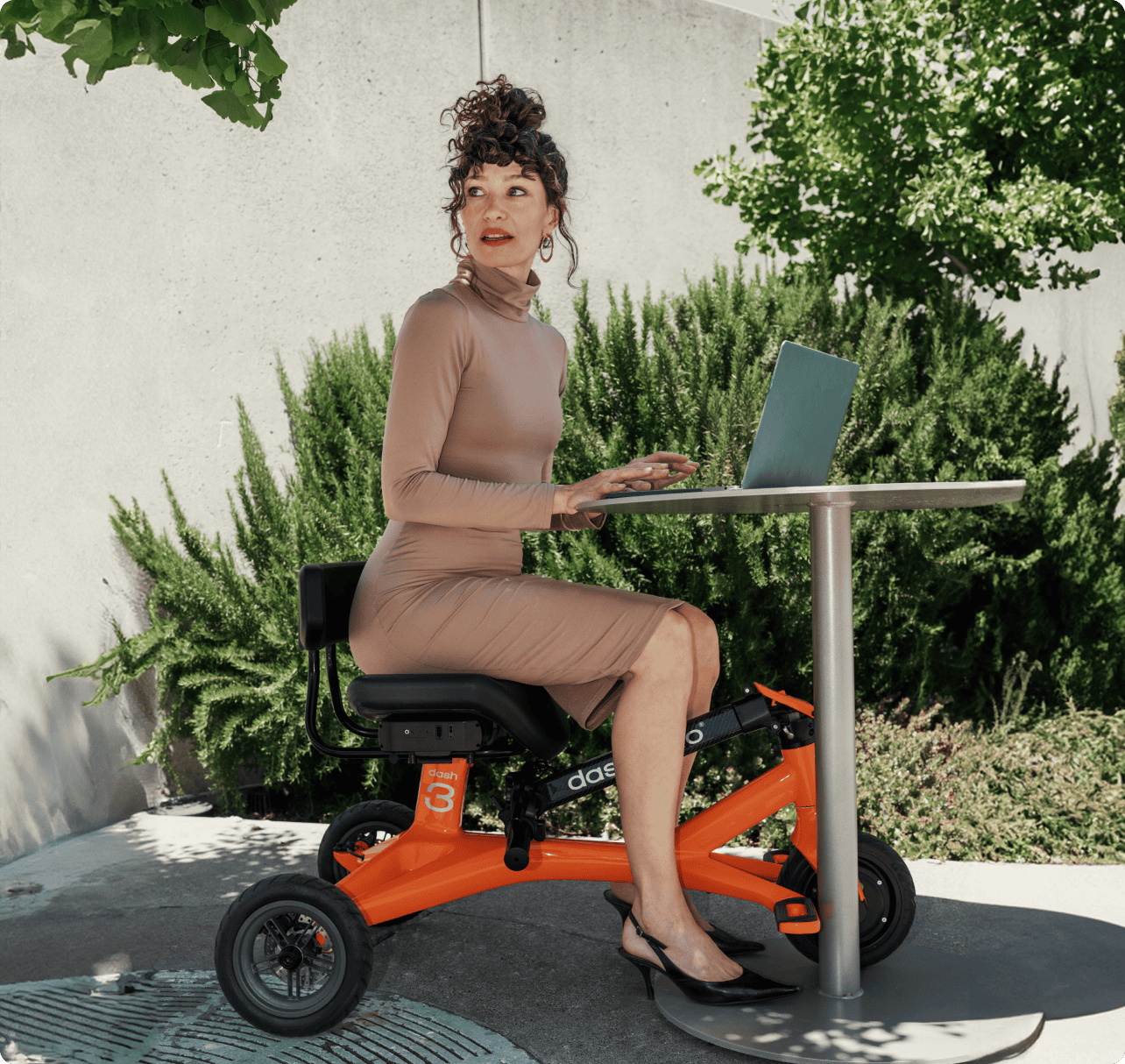
Ground clearance is the gap between the underside and the ground. Too little, and a low front edge or threshold can catch. Too much, and the seat height may rise, which can make transfers harder. Neighbourhood routes often include driveways, kerb ramps and slight cambers, so the scooter needs a sensible middle ground rather than an extreme design choice.
It is worth noticing how a scooter behaves at slow speed over joins and ramps. A small bump should not make the whole machine jolt or veer. Steady movement matters more than raw speed, particularly where people share the pavement.
Comfort that supports real journeys
A short trip still feels long if the seat is uncomfortable or the rider is bracing against vibration. Seat cushioning helps spread pressure and reduces the need to shift constantly. The seat should also give enough support for the rider to sit upright without gripping the controls for balance.
Tiller adjustment changes where the handlebars sit in relation to the rider. Good adjustment allows relaxed arms, clear sightlines and easier steering. If the tiller is too far away, the rider leans forward. If it is too close, turning can feel cramped. On a scooter used by more than one person, adjustability becomes even more important, because a single setup rarely suits everyone.
What changes from place to place
The same scooter can feel different in a shop, on a pavement and around a neighbourhood. The route is not only about distance. It is about the width of the space, the condition of the surface, the number of turns and the way other people move through the same area.
Inside shops
Indoor manoeuvrability depends on slow control, a manageable turning circle and a riding position that lets the user see shelves and people clearly. A scooter that accelerates too sharply can feel hard to place in a queue, even if it has a compact frame. Smooth controls are useful because they let the rider make small corrections without lurching.
Doorways and checkout lanes are common pinch points. A rider does not need to know every measurement by heart, but it helps to notice where the scooter feels hesitant. If the front wheels turn tightly while the rear end swings wide, the machine may be awkward in aisles. If the scooter tracks straight and turns steadily at walking pace, it is more likely to feel calm indoors.
On pavements
Pavement width can change from one block to the next. A route may feel open until a delivery, a bench or a group of pedestrians narrows it. In those moments, predictable steering and good visibility matter. The rider needs to be able to slow early, stop smoothly and choose a line without sudden movements.
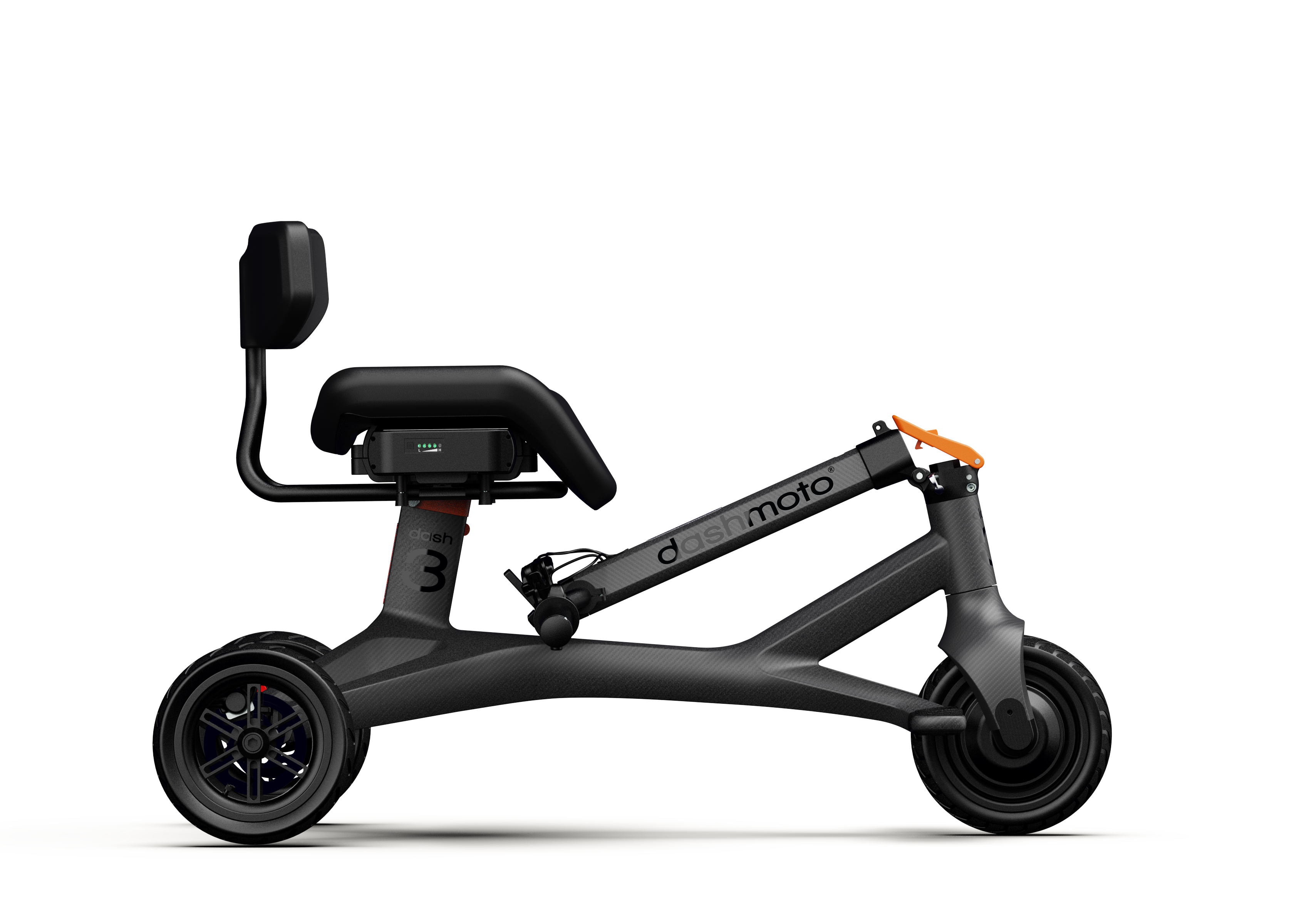
Surface condition is the other issue. Paving stones, patches and kerb ramps can make a scooter wobble if the wheels are small or the frame is very light. A portable design still needs enough stability to handle ordinary street details. The aim is not to tackle rough ground at speed, but to move across normal urban surfaces with confidence.
Around neighbourhoods
Neighbourhood journeys often mix quiet streets, crossings, small slopes and short indoor stops. This is where portability has real value. A scooter that can be folded or separated for transport can travel to a different area before being used, then be stored without taking over a room. That can broaden where a person feels able to go.
Battery range is part of the picture, though it should be read carefully. Hills, stop start movement, low temperatures and rider weight can all affect how far a scooter goes on one charge. For local errands, the practical concern is whether the scooter has enough reserve to complete the trip and return without the rider feeling anxious about the remaining charge.
Portability and independence
Folding or dismantling a scooter changes how it fits into daily routines. It may be placed in a car boot, carried into a home, or set aside between trips. The important point is that the process needs to suit the person using it. A design that folds neatly on a demonstration can still be difficult if the parts are heavy, awkward to grip, or hard to line up.
Storage also shapes the choice. A scooter kept in a hallway needs to turn without blocking doors. One kept in a car needs to fit without leaving no room for shopping. One used in an apartment may need to be quiet, compact and easy to park. The best portable scooter is the one that can be moved regularly, not just the one that can technically be folded.
Independent movement is not only about distance. It is about reducing the number of decisions that can stop a person going out. If a scooter is easy to bring along, simple to store and calm to ride in familiar places, it can become part of ordinary errands rather than a special arrangement.
Trade-offs worth weighing
Most decisions involve compromise. A lighter frame can make carrying easier but may feel less settled on rough paving. A larger seat can improve comfort but reduce room in tight spaces. Longer range can add weight and size. Better suspension can smooth a ride but may make the scooter bulkier.
Rather than chasing one headline feature, match the scooter to the places where it will earn its keep. If the main routes run through shops and smooth pavements, compactness and slow-speed control may matter most. If the route includes uneven crossings and longer stretches outdoors, wheel size, clearance and stability deserve more attention. If the scooter must travel by car or be stored in a small space, the folding system and weight become central.
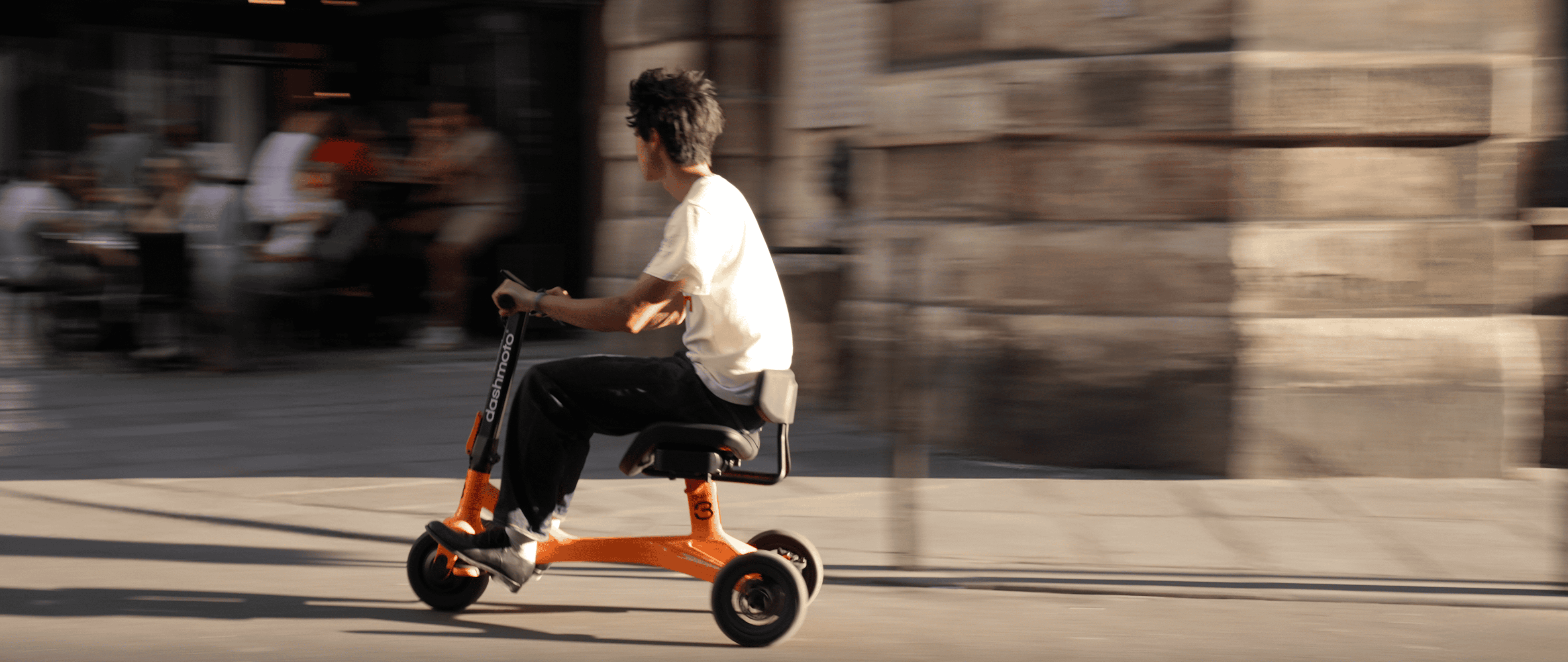
A useful way to think about fit is to picture a normal day. There is the doorway at home, the pavement outside, the shop aisle, the queue, the journey back and the place where the scooter will rest afterwards. A lightweight city mobility scooter works best when it fits that whole pattern, not just one part of it.
Signs of a good match
A suitable scooter should feel steady at the speeds used in public places. It should turn without scraping, stop without dipping sharply forward, and leave the rider sitting supported rather than tense. Controls should be easy to reach, and the riding position should allow a clear view ahead. Folding or lifting should be realistic for the person who will do it, with parts that are manageable and easy to handle.
There is also a safety dimension. Any scooter used near roads, crossings or busy pavements needs to be used with care and within local rules. If a scooter shows repeated problems with steering, braking, charging or unusual noises, it should not be pushed through those faults. Those issues call for inspection by a qualified professional rather than improvised repairs.
The right choice is rarely the biggest or the lightest option in isolation. It is the one that makes ordinary routes feel manageable. When a scooter suits shops, pavements and neighbourhoods, it stops feeling like equipment that dictates the day and starts functioning as practical transport for everyday movement. That is the real value of a portable electric scooter designed for local life.
❧